Friday, January 16, 2009

Wednesday, January 7, 2009
Gin Tonic
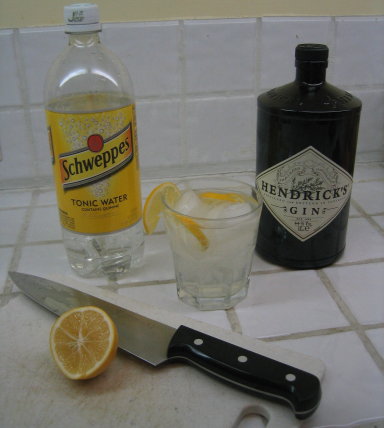
Expiration dates cause fear. Irrational: likely. Why: because of our inner self-insecurities. I need to be validated by external sources, and I doubt that I am uncommon in this regard. After watching a sober and yet compelling movie I felt the need for a drink, but nothing too strong. I thirst for beer in times of socialites, or scotch if I am doing something slightly more cerebral. Occasionally wine also fills this need, but it too comes with requirements. Gin and tonic was what struck this night: something with introspection and smoothness, and a hint of sweetness. Not harsh or muddling to the head, just sweet and smooth, with a slow numbness that precipitates from the tongue to the fingertips.
Upon opening the fridge door I spot a bottle of unopened tonic water. I feel satisfied in knowing that I have the ingredients still in place after a lengthy period of being afar. However with grasping the bottle I think back to when last I purchased it. I hesitate at the etched numbers on the side of the plastic tube: 20/10/08. The perforated plastic cap is still intact. A slight fiz is apparent upon moving the bottle. Is it still good though two months have since lapsed?
 My wife shakes her head and says yes it is good. She feels that these dates only pertain to natural perishable goods; the likes of eggs, meats, and such. I trust her but thoughts of doubt percolate from my gut, an ominous omen of previous poor decisions of my own creation.
I pour the gin into a large tumbler. Two, three or four fingers worth? I’m not counting. The tonic follows, close to doubling the concoction’s volume. Finally the lime juice, which is also expired and should mean that the two will cancel each other out, perhaps. A stir of the finger and a final mixing in the mouth before easing into my body’s cavities.
When did we, or I, become so insecure? The dates on supposedly perishable goods is not a thing of antiquity but rather a recent invention. I have heard, though not clear where from, that this is a ploy by companies to make you buy their products more often. For if an item has a date stamped in authority then the buyer will submit to such evidence of defunctness. Correct? Or are the stamped dates there for our protection? To make our lives easier and to save room on our calendars from making small penciled notes about when a certain carton of milk will go bad? Our parents and grandparents never needed such dates, and I am quite certain they never spent much time fussing about when something was to go bad. Instead they tasted, smelled, poked, prodded, fingered, licked, eyeballed, and fed it to the neighbor’s cat to see if it survived. So how did we, the society of 2008 –soon to be 2009- come to lack these so mundane of skills and instead become insecure and all trusting in an odd and somewhat mysterious date that is stamped to all of our foods? What happened?
At least if we poor more gin into our drinks it should kill all the bacteria that had been
 fermenting inside our spoiled tonic.
Or at the very least make us numb to our growing insecurities.
cheers
Thursday, October 16, 2008
Math is not my Friend
I suck at math. The post about how many people turned out to vote doesn't even make stupid sense. I just looked at it and the numbers don't add right.... ugh.... I will NEVER post again about stats stuff. Political stuff that is all opinions and not based on facts, sure. Numbers I think not. However, no one did catch it....
Obey
Just thought I'd post some artwork that I admire very much.
The artist is Shepard Fairey. http://obeygiant.com/

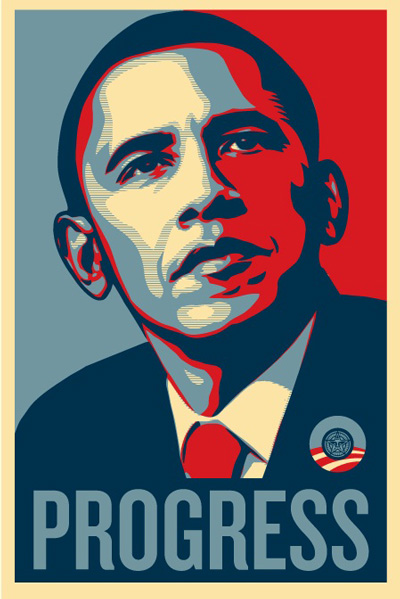


The artist is Shepard Fairey. http://obeygiant.com/
Wednesday, October 15, 2008
Canada Elects
The Canadian election is over and the Conservative Party of Canada has won, but produced a minority government. I have been thinking throughout this election of just how many people would vote. It always seemed like no one voted. So I've added up the numbers of how many votes the parties received and compared it to Stats Canada figures.
10,562,956 people voted in this election. The conservative government received 5,204,468 votes that resulted in a win of 143 seats out of a possible 308 seats. This means it took 49.27% of the people who voted to provide us with a minority government (for non-Canadians, there were three other parties who won seats in the house of commons and a plethora of smaller parties who did not win any seats but still campaigned and received votes).
The population of Canada was 33,311,400 as of July 1st, 2008. That provides an average of 31.7% of Canadians actually turning out to the polls. But wait, that is the total population that includes people who are not old enough to vote. The breakdowns I could find from Stats Canada were not too specific, but according to their charts for 2001, there were roughly 8 million people under the age required to vote. If you pop that number into the equation than the percentage of people voting jumps to 71.6%. That is a lot by any standard!
I'm not a statistician, but these numbers are likely very close. What is important here is that I was wrong in my earlier opinions that people don't vote in Canada. They do. The Conservative Party won, and people voted for them. My problem -which is not discussed here- is that Canada is voting locally for a federal leader. The Bloc Party SHOULD NOT be allowed to run in a federal election. How is it just that Quebecers vote for a provincial party that has no input in the matters of other provinces and yet their same votes affect the outcome of a federal election that all other provinces vote in! If the Bloc did not run in these federal elections the Conservative Party would still have won. I am fine with that because the majority of Canadians voted for them. I believe in the democratic system. BUT I do not agree with groups that CANNOT run federally still compete against federal parties in provincial ridings.
Monday, October 13, 2008
Sketching the Past: Illustrations in Archaeology

The following is an excerpt from a paper I'm working on. The paper is entitled: Sketching the Past: Illustrations in Archaeology. The main thesis is that scientific illustrations are problematic and deserve better attention. Further, these illustrations hold connotations that many take for granted. This is primarily a theoretical paper. Below is the discussion I wrote for the first step in any illustration, the visualization of an object(s).
One must first see what they are drawing before they set pencil to paper. This is the process of visualizing. An artist needs to stare intently at the object(s) before them. The totality of the image is viewed. Questions such as shape and size are studied, along with the object’s color and where shadowing occurs or doesn’t.

An artifact is not just an artifact, and by staring intently one can understand this. What this statement implies is that an artifact, or any object for that mater, is a jigsaw of colors, shadows, and lines. The eye must become comfortable with the object by staring at it and getting to know it.
An analogy might help in describing this problem. A person driving an automobile does not generally note all the intricacies of everything that they pass; signs tend to blend into one another and only the general outline or meaning is remembered or acted upon. A stop sign will register with a driver to halt the vehicle, but the actual image of the sign likely fades from his or her memory fairly rapidly. For an archaeologist, we cannot treat artifacts in such a manner. While sorting through artifacts, we cannot treat them like road signs at 50km an hour. Instead we should take a leisurely walk. The past deserves such attention.
Visualization of artifacts at the beginning of an illustration forces the archaeologist to take a walk with frequent breaks. Visualization forgoes the speeding past road signs. The eye is forced into looking at one artifact for a suspended period of time. The eye relaxes and the artifact becomes a familiar shape, not some alien object that becomes rapidly tossed into Ziploc coffins.
Sunday, October 5, 2008
Poster for Illustrations

 These posters were created for advertising my work. If you are interested in commissioning me for an illustration, leave me a reply on here and I will respond back. Specifically these posters are aimed at scientific illustrations, but I'm game for almost anything.
Subscribe to:
Posts (Atom)