Thursday, January 12, 2012

Top Movies of 2011: My Opinion

For what it's worth, here's my list of the top movies I've seen this year. There are a few movies I did not have a chance to see yet that I am sure would make it somewhere in this list, such as Girl with a Dragon Tattoo, Midnight in Paris, Ides of March, Driver, The Artist, and Martha Marcy May Marlene. Nonetheless, I have seen a large swath of the movies released this year and I have noticed that the ones I believed to be the best were nowhere to be found on the lists others have set up (for instance Rotten Tomatoes). In particular, I strongly felt Hugo was an astounding piece of film despite being unanimously panned and dismissed, unlike the popular clunker that the Descendants was and yet unanimously hailed as being the year's strongest.

The movies here are what I felt were some of the best and most worth watching. I had more of a 'take it or leave it' mentality for movies like Contagion and Transformers, and hence are included here.

My choices:

1. Hugo
 A visually stunning movie where Scorsese delivers a doctoral thesis on why film is important and how 3D can be used to tell a story. This is a masterful movie where each character is well rounded and utilized to their full potential. Most under-rated movie of the year.
2. 50/50
 This was an astounding movie in how real and powerful the subject matter of cancer was presented. The performance by Joseph Gordan Levitt was inspiring and the script was strong. Levitt definitely deserves an Oscar nod, if not the prize itself.

3. War Horse
 It begins with a Disney-esque sequence but quickly turns into a Spielberg classic thereafter. This is a movie constructed around several vignettes that approach the subject of war from a few different angles and manages to do so deftly and with great thought. What surprised me the most was that considering I am not someone who cares for animal centric movies, I was moved and attached to the character of the horse by the end of the film.

4. The Muppets
 To be fair, I am a little biased in my opinion of this movie as I was already a fan of this franchise. However, the people that went to see the movie with me were not but quickly became fans thereafter. I loved how witty and original the songs were, how gifted the jokes were, and how the new movie stayed true to the original conception of the Henson Muppets.
5. Young Adult
 This movie stands out from many of the other movies I saw this year for it's unparalleled acting from Charlize Theron and the level of detail that director Jason Reitman brings to the screen. The story is flawless with having a twisted nature that makes you simultaneously sympathize and hate the main character.
6. Crazy Stupid Love
 Hands down the biggest surprise of the year. Going in I thought I would encounter a generic romantic comedy but instead left seeing a well thought out and composed drama. A multitude of well conceived characters both in story and acting are presented. 
7. Money Ball
 The acting is superb and the cinematography is captivating. The love for the game is on center stage and interest in the characters is abound. The movie falters, however, with not presenting enough on the characters themselves and would have done better if the supporting characters were developed more. 
8. Captain America
 It has the thrills as expected with a summer block-buster, but it also had some of the strongest characters to be found in any movie this year. The movie is filled with fun and excitement, which pleased me on a visceral level but also left me surprised with the breadth of story and character. By far the best of the summer block busters.
9. Friends with Benefits
 Reminded me of 300 Days of Summer, but came up short in the story's grandeur and originality. However, I greatly appreciated the refreshingly real substance of this romantic comedy, which is why I draw parallels to it and 300 Days of Summer. 
10. Rise of the Planet of the Apes
  Like Captain America, I came in expected a generic summer blockbuster but left seeing something much more. While falling in the category of sci-fi, this is more of a drama that focuses on the relationship between an ailing father and his son. This is an incredibly bleak movie with strong acting and a surprisingly sophisticated story line. One of the year's dark horses.
11. Arthur Christmas
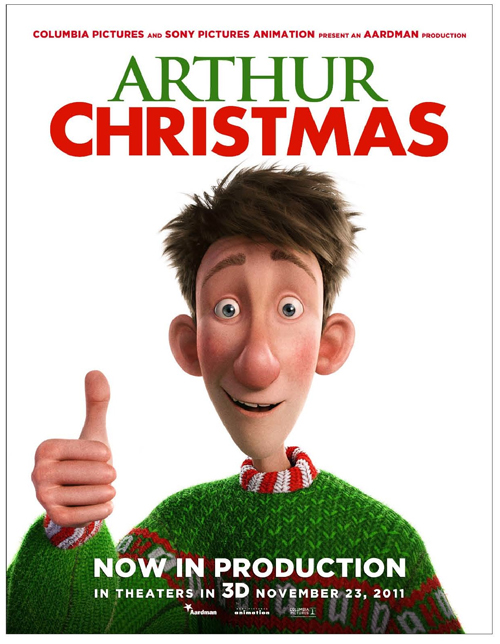
 Funny and touching. The subject matter is not unique as it features the squabbling relationships within a family, but it is executed very well with numerous well timed laughs to make it perhaps the best animated movie of the year.
12. Harry Potter
 The ending of an epic franchise. By itself, the movie is strong but not excellent. However, in the context of the series this finally acts as a terrific bookend. I left the theater feeling satisfied with how the characters were left but was aggravated how it completely dropped the Deathly Hallows' storyline that the previous two movies had been working towards.
13. Thor
  There is nothing deep or Oscar worthy found in this movie. However, this was one of the most fun movies of the year besides The Muppets. Some of the best casting was featured in this movie, with a story line that had a perfect pace and amount of laughs that filtered through the screaming action sequences. The biggest flaw, however, was that a lot more story could have been told. In particular, this story focuses on the decent and resurrection of Thor, but the story pays hardly any time to showing Thor's decent.
14. Bridesmaids
 While funny, I did not find this movie as hysterical as some. It is obviously a female take on The Hangover, and does so with a considerable amount of originality. One of the better comedies of the year.
15. X-Men: First Class
 Like Thor, X-Men had some of the year's best casting. The acting was outstanding but the film suffered from several slow moments in the story; Michael Fassbender and James McAvoy stole the show.
16. Super 8
I want this movie to be better! The first 4/5 of the movie reminded me of the best Spielberg films but the ending was so damn poor and cliched! The movie opens with an original premise and uses aliens as a foil to understand the relationship between father and son, and the loss of the mother character. Excellent dialogue and acting all around, but with such a weak and generic ending it reminded me of District 9 where again we had an original movie that ended like a generic action flick.
17. Descendants
 I don't get why people love this movie so much. George Clooney is good but he is only playing himself; I do not see a noticeable difference from how he portrayed characters in other movies. The directing is well executed with some terrific cinematography, however the story is segmented with characters being haphazardly dropped and a different storyline being awkwardly jammed in half-way through the movie.

Star Wars Lego Mini-Figures: 7957 Sith Nightspeeder

Ventress
Opress
Anakin
Over the holidays I was given a new Star Wars Lego set! This is a new set based off characters from the Clone Wars tv show and featured Asajj Ventress, Savage Opress, and Anakin Skywalker. This set's vehicle is pretty simple, featuring a skiff-like machine with two detachable rocket-styled bikes. Opress and Ventress utilize the vehicle. There is nothing horribly complicated to this set, and truly the set is memorable only for the mini-figures that it includes.

I did not previously have a Ventress or Opress in my Lego mini-figure collection, but do have several Clone Wars Anakin Skywalker figures. The Ventress mini-figure included two lightsabers with curved handles similar to Count Dooku's. Her body has a simple design with dark blues and blacks, with small amounts of silver on the front. The head has an intricate design, faithfully representing the markings she sports in the cartoon series. These markings are found on both the front and back of her head.

Savage Opress is easily one of the most complex mini-figures I've seen. He came with two weapons, a double-sided lightsaber and a large war axe. The front of his face has an intricate design similar to that of Darth Mauls', but is in eye and has a head attachment with upward extended horns. A chest plate fits under his head and covers another intricate yellow design. When the chest plate is fitted on, this yellow design is completely obscured. I appreciate the level of detail here as Lego did not have to add the yellow design with it being covered up.

#7957 set Anakin
Lastly, an Anakin Skywalker mini-figure was included in this set. He came with a blue lightsaber that had a dull silver handle. Black and brown colors dominate his body, with simple lines suggesting robes and a belt, which is the attire worn during the cartoon series. There are scars on both the left and right side of his face and his hair is big and disheveled. Compared to the other Clone Wars series Anakin Skywalker I have (from the #7669, Anakin's Jedi Starfighter set) , the heads are identical, but the chest for the new one is much darker in color and has a slightly different pattern.

All three mini-figures from #7957
#7669 set Anakin with R2D2

Saturday, January 7, 2012

World Juniors 2012: Calgary

For the past few weeks I've been working at the World Junior's event in Calgary, Alberta. I wasn't doing anything too remarkable, but the event itself was. There were people from multiple countries such as Latvia, Sweeden, Russia, and so on; all of whom had different roles with the hockey teams that were participating in the events. During the two or so week long event I managed to see a few games including the gold medal game that pitted Russia against Sweden. On the day of the gold medal game I saw or met numerous people associated with the various teams. I also saw or met numerous notable hockey and political personalities that were attending the games, such as Steve Yzerman, Prime Minister Harper, and Jim Peplinski. 

Gold medal game: Rus vs Swe
A few of the individuals I met, including Peplinski, gave me pins. I am not a pin collector but as you can imagine from the kind of things I discuss on my blog here, I do collect a variety of things. The pins that were given to me are incredibly unique and definitely make great keepsakes from attending and working the games. Additionally, my experiences have been nothing but positive and in particular one pin showed just how enthusiastic and kind the people associated with the World Juniors teams were.
Event Organization pin.
IIHF 2012 pin.
Finish /Swedish 2012 IIHF pin.
Russian hockey pin (Russian text).
In all, I was given 4 pins. None of these pins could be bought at the event. Instead, certain individuals (mainly people associated with the IIHF or specific teams) handed out pins when asked. One pin I received was provided by the event organization for working there. This pin features an image of the World Junior's location, unlike any of the other pins I saw. A second pin, given to me by Peplinski, is the IIHF 2012 event pin. A third pin commemorated the Finish and Swedish teams and was given to me by one of the Swedish team coaches. The fourth pin represented Russian hockey and was given to me by the assistant coach of the Russian team. When I had first met the assistant coach I had asked if he had any extra team pins. In his broken English, he said he had run out but would grab more from his room. I didn't think for a second that he would actually return, but sure enough he did. 

Those associated with the Russian team were by far the nicest of anyone at the games. The Russians were not the nicest because they gave me a pin, but instead because of how genuinely enthusiastic they were about the games. They were enthusiastic about Canada and hockey as a whole, which is counter to the serious nature that has epitomized their popular perception. It is because of this that I will cheer a bit more loudly whenever I see a Russian team play!

Thursday, December 29, 2011

Lord of the Rings Lego sets!

That's right! Lego is planning on releasing a series of Lord of the Rings sets this summer, 2012! I learned of this from Ain't it Cool, who shared images from four proposed sets -which I have also posted here. I am already excited about this and am curious to see where they could go with this product. Unlike other movie franchises that Lego has mined, like Star Wars and Harry Potter, there are no vehicles and few key structures that could be built. In these six images we see two key structures, Helm's Deep and the Mines of Moria. Besides these places we have possibilities in the various homes from the Shire and the tower of Isengard. What is perhaps more enchanting is the possibility of sets featuring The Hobbit! A giant Lego set of Smaug would be truly jaw-dropping-drool worthy!


Thursday, October 20, 2011

Week 4 of the New DC Comics: Part Deux!

This was the final pile of new DC books I read. The pile included All-Star Western, Aquaman, Batman: The Dark Knight, Blackhawks, The Flash, and The Fury of Firestorm. This was a very strong group of books in comparison to the other books released in the final week. There were some weaker books, but overall each of the books hold an argument for continuing to read them. Also, I had not previously read any of these books on a monthly basis. From what I read, at least three of these books will be picked up again in the future: All-Star Western, Aquaman, & The Flash.

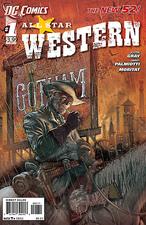
All-Star Western: This is a fun book to read! It is a wonderful break from the rest of the super-hero laden comics that DC churns out. Here we have the story of Jonah Hex, a mysterious bounty hunter of the late 1880's. Hex comes to Gotham city where he finds himself caught up in a Jack-the-Ripper style murder mystery. The story is great with wonderful nods to places and names that crop up in the modern Batman books, making you wonder if what happens in this book could affect the modern books. The art is by Jimmy Palmiotti, who is an artist I have loved for a very long time. This past summer at the Calgary Fan Expo, Palmiotti was in attendance and made the announcement that he would be joining the creative team on this book. His art is masterful here and shows how much his talent has grown over the decades. Highly recomend this book!

Aquaman: Doesn't Aquaman talk to the fish or something? This and other questions are all bluntly answered in this well crafted and highly entertaining first book!

Honestly, I have never been a fan of Aquaman. He's the but of most geek'ish jokes. Geoff Johns, the writer of this book presents a a character who is re-examining his past, left his previous role of King of Atlantis, and is trying awkwardly to fit in to life on dry land. The story also has a slight edge to it that feels as though this is how Quentin Tarantino would interpret the character provided he had to work within a PG-13 framework.

Johns' story does not explain the origin of Aquaman but instead plops the reader in the middle of this character's story where a new chapter in his life is being explored. This strategy has been found in a number of the new DC comics such as Swamp Thing and Hawkman, and as in the case here can be a great tool to satisfy older and newer readers by not discrediting the past while offering a clean slate for the new reader. In all, I really enjoyed this take on Aquaman and am very interested in where this character will be taken next.

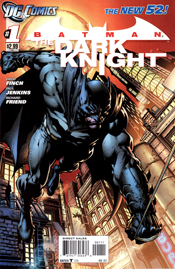
Batman, The Dark Knight: Another Batman book is included in the New DC lineup. Thus far there have been Batman, Batman & Robin, Detective Comics, and the plethora of Batman spin-off titles like Batgirl. The high number of Bat books is rationalized if each of the comics focused on one aspect of Batman. In such a case Batman & Robin would be the relationship between the two, Detective Comics would focus on Batman solving crimes, and Batman would be a holistic book focusing on Bruce Wayne, alter ego of Batman, and interactions with secondary characters like Robin. However, what is The Dark Knight supposed to be about then? It would seem that this book focuses more on the private life of Bruce Wayne as the first issue explores a party that Bruce holds where a member of the police department says he is being investigated for financially supporting the Batman. If this book is to focus on Bruce Wayne, then I am left wondering if this is something I have ever wanted to read about or will this provide me an interesting angle on the complex world of Batman?

Overall, the story isn't bad but I do not find that it adds anything to the other Batman books and instead this book will get forgotten about. Even if the book is to focus on Bruce Wayne, I am unconvinced there is a need for such an ongoing book; instead, this might work better as a mini-series. The writing and art is provided by David Finch, who might be better than Tony Daniels who draws & writes for the Detective series. I recomend this book but would not doubt this book being canceled within the year because of its redundancy with the other Bat books, even if it is done well.

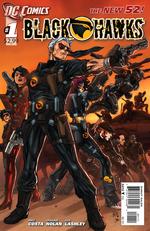
Black Hawks: This is not a bad book, but it makes very little sense in how it figures into the overall DC Universe. A team of UN sanctioned covert military agents are focused upon here where they combat various threats. In the first story we see the group stop terrorists (I guess that's what they are), a UN representative informs the Black Hawks that their cover has been compromised, and that one of their agents has been infected by something. Not a bad introductory plot, but without an explanation of how this fits into the realm of other superhero books I was left wondering what the point of Black Hawks will be. Is this book to be an isolated group of characters or will their actions have repercussions (and vice versa) in other DC books? Black Hawks #1 is worth reading, and I am tempted to read the next few issues to see where this book is headed. However, if the creators of the book do not explain the role /importance of this book soon I will also quickly loose interest.

The Flash: The releasing of the Flash during the final week of the New DC run was a misstep. The Flash was the central figure during the Flashpoint series that led to the re-numbering of the DC comics. As he was such a pivotal figure, one would guess the title Flash book would be massively promoted and included in the first week of books. This book, one would again assume, would be used to explain how things did and did not change in the DC Universe as the Flash was the reason why these changes had begun at all. Additionally, one might assume that the Flash would be one of the few characters to remember what the universe had been like and to recall what he had previously done. Instead, the first issue of the Flash provides none of this and leaves the long-time reader wondering how the previous Flashpoint and Flash books figure into the new Flash series.

Leaving the problems above aside, Flash #1 is a stupendous comic. It is loads of fun and features some of the best art in the DC Universe. Manapul utilizes grey washes over top a cartoony /anime style that works really well here; also reminds me of Tim Sale's work. The dialogue is also crisp and the pacing of the comic works very well, leaving a lot of story for developing characters but never making you feel bogged down with too much exposition. This is one of the best books DC has produced and should /will become one of their most popular books!

The Fury of Firestorm, The Nuclear Men: This is hands down the worst illustrated book out of the bunch. Yildiray Cinar's art is horribly stilted and filled with poor anatomy. The faces feature two expressions: nothing or angry. The story was also generic and poorly structured with a secret group of assassins chasing after a mysterious product of a science experiment. The reader is taken on a voyage across the globe as this group brutally murders anyone associated with the experiment as they track down whatever it is they are looking for. Eventually their chase leads them to a high school in the United States where two teenage boys have the product and use it and become Firestorm. This is a very generic story that has been used for the retelling of too many other super-heroes. What makes the story worse is that it took TWO writers to come up with this: Gail Simone & Ethan van Sciver. I'm not familiar with Sciver, but Simone has produced much better stuff and recently gave us the pretty decent Batgirl comic. I don't know what happened here between these three creative persons, but I have no interest in seeing where this book goes.

Thursday, October 13, 2011

Week 4 of the New DC Comics!: Part Une!

 This is the longest post yet about the new DC comics. This length is due to the poor nature of many of the books DC put out in their final week of new books. In this post I only discuss half of the books DC released in their final week, and the other half will be discussed in a later post (probably next week). None of the below comics were ones I previously read and none are instant winners. Four of the comics did leave me interested enough to pick up a second issue and give the books another try, but overall this group of comics was a serious disappointment. From the group discussed here, I would recommend: Justice League Dark, I Vampire, Savage Hawkman, and maybe Teen Titans.


Green Lantern, New Guardians: On the plus side this book offered the kernels of an interesting story, a very brief reframing of the origin of Kyle Rayner becoming a Green Lantern, and that the art was OK. The biggest downside is that as a previous follower of the Green Lantern comic the story left me thoroughly confused as to what the heck has happened to the continuity of the Green Lantern comics and the DC universe as a whole. First off, why is Kyle not already a GL but everyone else previously shown in GL books are? In the previous GL books Kyle was already a GL, so I presume this book represents a complete reboot of Kyle's character, but why is he the only GL to have a reboot? In the previously released GL #1, the story picked up right where the previous GL story started. This lack of coherency in story has left me wondering where all the other new DC books fit into the continuum as it appears that books such as Batman have been left unchanged but books like the Blue Beetle have been completely altered. Is it me or did DC release a source book explaining all this that I missed?  A second and smaller problem is that Kyle is unaware of the presence of other Lanterns when he first becomes one, yet a random guy he saves on the next page is well aware of their existence. Furthermore, this comic appears to occur at the same time as does the story in the Green Lantern CORPS comic where the Lanterns are very well known throughout the world. So how the heck doesn't Kyle know about the Lanterns?


The issue of continuity problems has been addressed by many other online critics. It is a glaring problem with the DC reboot that boggles my mind as to how they managed to mess things up so badly. The blame settles upon the editors and should have been a simple issue to ensure not to happen. DC advertised their reboot as a clean slate to their heroes so new readers could begin reading their books. However, this clean slate and issue of reboot has only been applied to a select few characters with no explanation why other heroes were not included.


I, Vampire: Right away I was confused by this comic for the title is almost identical to another comic DC is producing under its Vertigo imprint. This other comic is called I, Zombie and is an absolutely exceptional book. The close similarity in name had me thinking these books would be connected in some way, but after reading 'I, Vampire' I discovered that there were no similarities other than the name and presence of classic horror creatures; but why use such a similar name? It makes no sense and is frankly a stupid move by DC.


One of the best parts of this book is the art. Andrea Sorrentino provides the illustrations that are strongly reminiscent of Jae Lee's work  with the usage of heavy and blocky blacks and scratchy /scribbly lines. This similarity is so strong that it leaves Sorrentino's art less memorable because of the lack of originality in style, but nonetheless the art looks good. What does work to Sorrentino's benefit is that no one else in the DC line of new books are using a similar style. While Sorrentino's art is not original, it is original in comparison to the other DC books.


i Zombie: confusingly similar names.
Going into this book I knew nothing about the characters or the previous usage of vampires in DC comics for that matter. The book opens with a conversation between two vampires, Andrew & Mary, and an ill described sequence of Andrew walking through a street filled with dead and weeding out the vampires from the dead that he then kills. The premise is interesting enough and a shallow depth of mystery this book provides also engaged my senses. However, I finished the book not caring about the characters. Such a lack of caring destroyed any sense of engagement the book had instilled in me. There is little depth provided to the characters and I, the reader, was thrown into the climax of the story without having a solid build-up to it. This book needed to start out much slower and allow the reader to become more familiar with the characters.


In all, I Vampire is a curious book that has me conflicted about the art's originality, confused by the naming of the book, and left me not  interested in the main characters. Yet, the storyline had some interesting elements that could pan out to be a gripping yarn later in the year.


Justice League Dark: This is a fantastic comic because I LOVED the art and the story presented a unique cast of characters in an exciting premise! In this issue, a team is slowly comprised with a group of mystics such as John Costantine and Deadman. The team has not yet gelled but the characters are converging, with their importance foreshadowed with the defeat of three members of the JLA by the character known as Enchantress. The story is very dark and moody, with tons of foreshadowing. 


The book could do with one or two less characters as a group of six is maybe too much and does not leave enough time to develop each character. Nonetheless, I enjoyed the group of characters assembled here but feel that Swamp Thing too should be included (despite the fact the book would do better with fewer characters). The art inside the book is just as well rendered as the illustration on the cover. The art is provided by Mikel Janin who uses soft lines with a realistic style that reminds me of J.G. Jones and Adam Hughes. I don't think this book has received much attention and could easily become a sleeper hit!


The Savage Hawkman: I am most familiar with the character of Hawkman from cartoons and a handful of his guest appearances in other comic books. I have always liked the character but whatever reason never became a big fan. This first issue did not make me into a big fan but did pique my interest. The story is pretty simple with Hawkman conflicted about having powers, which then change and force him into retaining his powers. Hawkman's conflict over his powers is poorly explained and made me feel that I should've read earlier Hawkman issues. 


The second component of the story is a glimpse at Hawkman's private /regular life, and then the story's third act reveals a new villain. These last two components were presented well but did not leave any character development for secondary and tertiary characters as multiple pages were used up with a fight sequence in the final act. As for Hawkman himself, there is little exploration or explanation of his character. The only side of Hawkman we see is his anger, which is all fine and well if you're talking about the Hulk.


Turning to the art you find a very compelling reason to pick up this and future issues of the book. Philip Tan provides luscious illustrations that have grey tones that give the illusion of each page looking like a water color painting. I love the contrast of loose and angled lines and the minimalist approach taken on some of the elements like clothing. It really works and I look forward to seeing where Tan's art will go later in this book.


Superman: Who is Superman in light of the new DC? This is a question left unanswered in this first issue. It is not until the final few pages that Clerk Kent is provided a brief character sketch. Instead, we are treated to a long explanation of what the role of the Daily Planet, or lack thereof, is in the new DC universe. It is more of a commentary on the changing face of the modern news media with obvious references to the Rupert Murdoch scandal of unethical journalism. Considering that this comic is named SUPERMAN, and that the point of the renumbering of the DC comics was to reintroduce new and old readers to their characters, I am left bewildered why George Perez, the writer, took such a bizarre direction in the first issue. 


Another glaring problem with this comic is that at no point was there a sense of wonder or awe. These are critical elements in portraying Superman. He is the Man of Steel, the Man of Tomorrow, yet neither nickname find relevance in this issue. Superman is instead used as a tool to halt evil doers, but in an unremarkable way where any other superhero could have been swapped in for Supes. In all, I was left un-enthused with this issue and the treatment of Superman. I truly expected much better from this issue.


Teen Titans: I am very torn on how to feel about this first issue. To begin, a book entitled 'Teen Titans' does not have the feel of a group of 'Teenagers'. Instead, Scott Lobdell, the writer, introduced us to a group of superheroes that are in their early to mid 20's; perhaps the book should be called 'Young Adult Titans"? Problems of age aside, I found the dialogue some of the best and funniest yet in the new DC books. The dialogue felt genuine to each character, with good usage of stereotypes in the dialogues that set the characters apart from one another; for instance, Kid Flash speaks in a quick and arrogant fashion while Red Robbin speaks in a more deliberate and wiser fashion. The overall story itself is strong but nothing too original. On the plus side, the book briefly introduces you to all the characters that will join the team but focuses on only three of them. This allows the reader a slower introduction to the book which fosters greater character development and character likability. This was a strong move that Justice League Dark would've been improved by following. 


The final point to mention is the art, which is one of the undoings of this comic. Brett Booth provides generic artwork where everyone has the same body type and facial features. The environments are rendered with sufficient detail but the choice of framing is uninspired. For this book to succeed, Lobdell needs to rethink who his script fits into a book called 'Teen Titans', and Booth needs to spend more time on creating original and realistic art.


Voodoo: Wow DC. All I can say is wow, and I do not mean this in an awe inspiring kind of way. This book had a number of problems, the biggest of which is who DC believes the target audience of this book is for? Ron Marz provides the script and is a writer I enjoyed years ago for his run on Green Lantern where he first introduced us to Kyle Rayner as a new GL and the beginning of Hal Jordan's insanity and fall from the GL's. Marz was a trendsetter back in the 90's, but his work on Voodoo is the work of a teenager who watched the movie Species too many times. The first 3/4 of this book is situated in a strip club and the last little bit features a brutal killing. There are no warnings for how graphic this comic is. DC is advertising their comics for all ages, yet have ramped up the maturity of the content.


Getting past the over the top usage of sex and violence, Voodoo does very little to build interest in where this comic is going. The story feels very tired with the over-done story of alien who is hiding on Earth and a mysterious government agency that chases after such aliens. This is all too similar to the a fore mentioned movie Species, and many other franchises such as X-Files. This lack of originality definitely hurts the comic's ability to spur interest, but the lack of story development also does not help. The first 20 or so pages could have been slimmed down to 5 as the exposition was gratuitous. In consideration of the art, Sami Basri does a commendable job. There is very little detail in his art, resulting in people looking more like silhouettes with a few interior lines. The result of such a style are clean and easily understood illustrations while also not leaving a big impression upon the viewer for remembering the art. Basir does the job well, but not well enough to be remembered against other artists. 

Friday, October 7, 2011

Design of Modern Movie Theaters: Encouragement of Privacy

Last night my wife and I saw The Help. It was a very enjoyable movie that suffered from the same malady as our previous escapades to a theater, restless and talkative audience. This got me thinking of why this is such a prevalent problem with the movies I've seen in the past decade and how I don't remember this being an issue when I was younger. To be fair, perhaps I am turning into a curmudgeon in my old age. Then again this might be due to something else: the changing design of movie theaters.

Black arrows represent the movement of staff while movie is playing. Note the limited amount of movement in a modern theater's design compared to the pre-modern design. The further you sit from the black arrows (staff presence) the greater the afforded privacy, and hence modern designs afford vast areas of privacy and ability to act against social rules.
Before the 2000's most movie theaters were designed with the theater sinking downward from where you entered the room. From my experiences, you would have two doorways at the back of the theater and another two at the bottom. These two entrances led to open pathways that split the theater along the sides, leaving the bulk of seats in the middle, similar to how modern theaters are designed. The difference between modern and earlier theaters is that the entrances now lead you to the middle of the room, where the back half of the theater is angled upward from where the entrance led you. This design breaks the flow of people entering the theater with people walking up to the back of the theater and walking down to the front of the theater. This results in the back of the theater being more secluded as no one needs to walk up to this area unless there are empty seats. Theater staff who check on the movie during a screening never enter the back half of the theater as their business is located in the front. As the staff only need to walk to the front (I don't really know what they do there) and the entrance opens in the middle of the theater, this creates a situation where movie goers know that the staff will never be walking near them. This adds a greater amount of privacy and freedom for them to act whichever way they wish.


I am not suggesting that a theater's staff would solve all the problems of rudeness in theaters. Instead I am suggesting that the possibility of staff entering someone's vicinity will create a sense of paranoia. I believe most movie goers know what is socially acceptable and not acceptable. Privacy encourages someone to act whichever way they wish for there is no fear of punishment. The possibility of the presence of staff removes the sense of privacy and has movie goers acting in a more socially acceptable manner for fear of punishment. By eliminating the traffic of theater staff to the back half of the rooms, designers have unintentionally created a space of privacy that allows for socially unacceptable behavior. The solution to making movie theaters a quieter and more enjoyable place is to eliminate private spaces and induce fear of punishment. To this end, staff must be sent in both directions from the entrance of modern designed movie theaters.